
There is a moment in the Gospels that feels almost too tender to hold.
As Jesus approaches Jerusalem, the city is alive with expectation. Crowds are gathering. Voices are rising. There is movement, energy, even celebration. And yet, in the middle of it all, Jesus stops… and He weeps. A deep, visible grief.
“If only you had known… what would bring you peace.”
It is a haunting sentence. Not because peace was unavailable, but because it was near enough to be known… and still missed.
The tragedy is that peace was hidden, it was misunderstood.
They were looking for strength, victory and change, but not gentleness surrender or transformation of the heart.
And Jesus, seeing where their path would lead, wept.
The things that bring peace are not complicated, yet they are costly in ways we can often resist.
Peace, as Jesus embodied it, is the presence of a rightly ordered heart, anchored in love, expressed through relationship.
It is the kind of peace that begins within a person, but never stays there.
You can feel the ache in His words. If only you had known.
And maybe that same ache lingers for us now as an invitation. Because the question has not changed. Do we know the things that bring us peace?
We live in a time with more access to spiritual teaching than any generation before us. We can listen, read, study, and learn endlessly. And yet, many still find themselves anxious, reactive, disconnected, or alone. Something is still missing.
Not because we lack information, but because peace is not formed through information alone.
It is formed in the way we live with God and with one another.
The things that bring us peace are deeply relational. Love, joy, peace, patience, kindness, goodness, faithfulness, gentleness, and self-control. All of these fruits of the spirit are relational.
They look like slowing down enough to be present, not just productive. They look like learning to return to ourselves after something hard instead of staying stuck in it. They look like telling the truth about what is happening inside of us without fear of rejection. They look like receiving love, not just giving it. They look like honoring others without losing ourselves.
This kind of peace cannot be microwaved. It is cultivated. And it almost always grows in the context of shared life.
Jesus did not form His disciples in isolation. He walked with them. Ate with them. Laughed with them. Corrected them. Restored them. Over time, something happened in that shared experience. They were not just learning ideas. They were becoming a different kind of people.
People who could carry peace.
And this is where it lands for us today.
Healthy relational and spiritual formation is not primarily about what we know. It is about what we experience together, and who we become as a result.
You can attend a hundred gatherings and still feel alone. You can know all the right language and still struggle to love well. You can pursue growth individually and still find your relationships strained.
Because peace is not something we achieve on our own. It is something we learn to embody with others. The things that bring peace show up in very practical ways.
They show up when we choose curiosity over judgment in a conversation, when we repair a rupture instead of avoiding it. Or when we say “no” with honesty instead of “yes” with resentment and celebrate someone else’s growth or success without comparison.
They show up when we stay present to one another, even when it would be easier to withdraw.
Sobering, because it reminds us that peace is not automatic. We can be close to Jesus and still miss His way if we are not paying attention.
Hopeful, because the door is still open.
Jesus did not weep to shame Jerusalem. He wept because He loves her. Because even in their blindness, His heart was still turned toward them.
That same heart is turned toward us. The invitation is not to strive harder, but to see more clearly.
To recognize that peace is not found in getting everything right, but in learning to live rightly connected… to God, to ourselves, and to one another.
And this is where the story turns in a way no one expected. The same Jesus who wept over what we could not yet see walked straight into the place where peace would be secured once and for all. There was already a vision of peace in their minds. They were longing for relief, for stability, for a world set right. Many hoped for a peace that would come through power, through visible change, through the removal of what felt threatening or oppressive.
But the peace Jesus carried looked different. It was not built on control or dominance, but on surrender, trust, and love that could remain steady even in the face of suffering. It was the kind of peace that does not wait for circumstances to change before it arrives.
It begins in the heart that is anchored in the Father, and from there, it reshapes how we see, how we respond, and how we live with one another. And it was easy to miss. Not because it was hidden, but because it did not come in the form they expected. There is something both sobering and hopeful about this.
On the cross, it looked like everything that brings peace had been lost. Love met hatred, gentleness met brutality, and relationship was fractured. But Jesus was becoming our peace, carrying sin, shame, fear, and separation into Himself to make a way back.
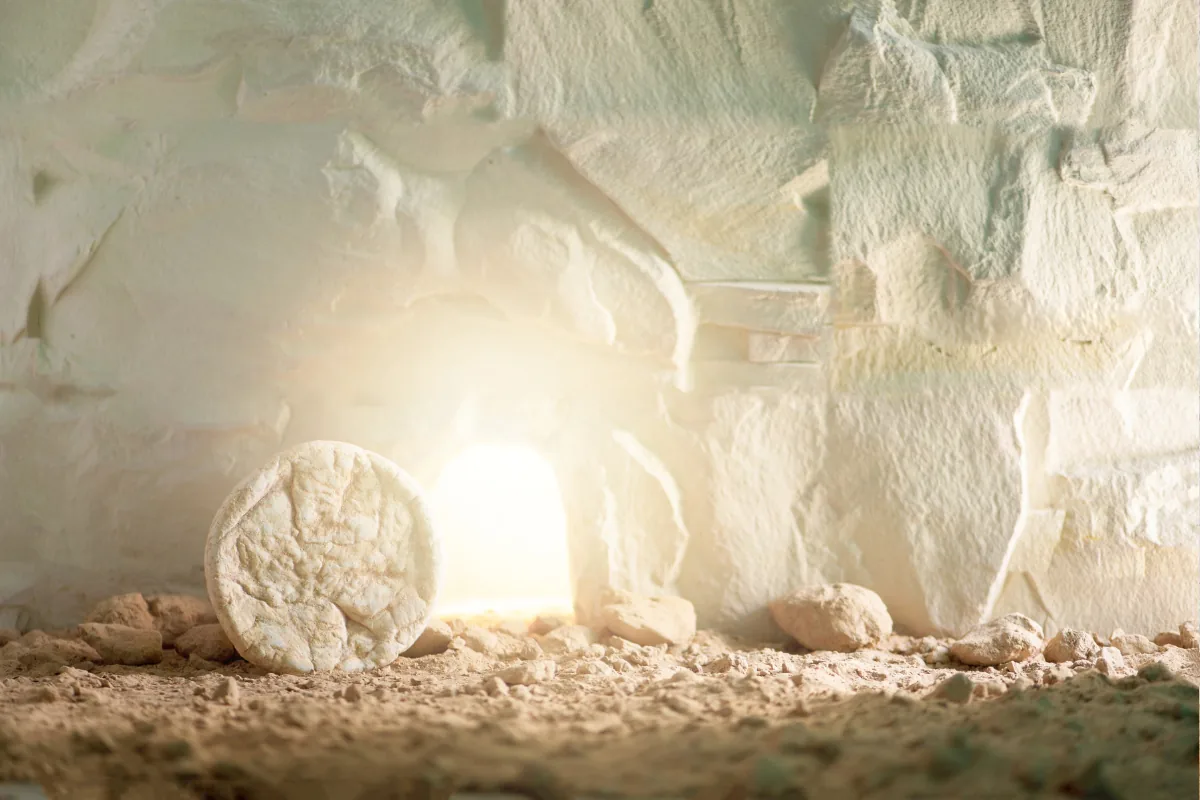
Then came morning. The stone rolled away, and the risen Jesus stood again among His people, speaking words that were not just a greeting, but a gift: “Peace be with you.” Peace was no longer something fragile we strive to achieve, but something alive, embodied, and given through Him. The resurrection means peace is not hidden or out of reach. It is received in relationship with the living Christ, and from that place, it begins to shape how we live with God and with one another.
Now the question, “What would bring peace here?” is no longer asked from striving, but from quiet confidence. Every time we return to connection, choose honesty, repair what is broken, or stay present in love, we are living from resurrection life. The peace Jesus wept for us to know has been made available, and through Him, it becomes something we can carry into the world, a peace that still heals, restores, and draws others in because it bears His presence.
And maybe it begins in a simple way. By asking, in the middle of our everyday lives…
What would bring peace here? In this conversation, in this moment .Not in theory, but in practice.
Because the things that bring peace are not far off. They are often right in front of us. Waiting to be chosen.